Custom Engine Parts from Drawings and Samples: How Ordering Works
Many engine peripheral parts are not bought from a catalogue. They are developed from a drawing or a sample supplied by the buyer, and the order that follows is a custom order rather than a repeat of a stocked item. This post explains how that kind of ordering works in this manufacturer's range, using only the process facts that its own pages state.
The starting point is the manufacturer's own description of itself: a professional engine peripheral parts manufacturer and factory integrating design, research and development, production and sales, focused on peripheral piping and valves for diesel and gasoline engines. Its service pages state the custom position directly: it develops and produces products based on the drawings or samples provided by customers, and it mainly makes customized products. Its shop flags sample-based customization and full customization. Those statements describe a factory that expects the buyer to bring the definition of the part, not a warehouse that expects the buyer to pick from a shelf.
A custom inquiry therefore needs different information from a catalogue inquiry. A catalogue inquiry needs a part number, a vehicle application, and a quantity. A custom inquiry needs those as well if they exist, plus the drawing or the sample itself, the vehicle or engine application the part is for, the quantity, and any requirement that affects how the part is made or checked. The manufacturer states that it has 10 senior product research and development engineers and 6 quality control experts, more than 10 professional technicians and more than 10 engineers among more than 150 employees, and its own testing lab with high and low temperature impact testing machines, metallographic microscopes, blasting test benches, three-dimensional coordinate measuring instruments, and image measuring instruments. Those figures describe the team and equipment that a custom inquiry will be handled by, not a promise about any single custom item, and a buyer should read them that way.
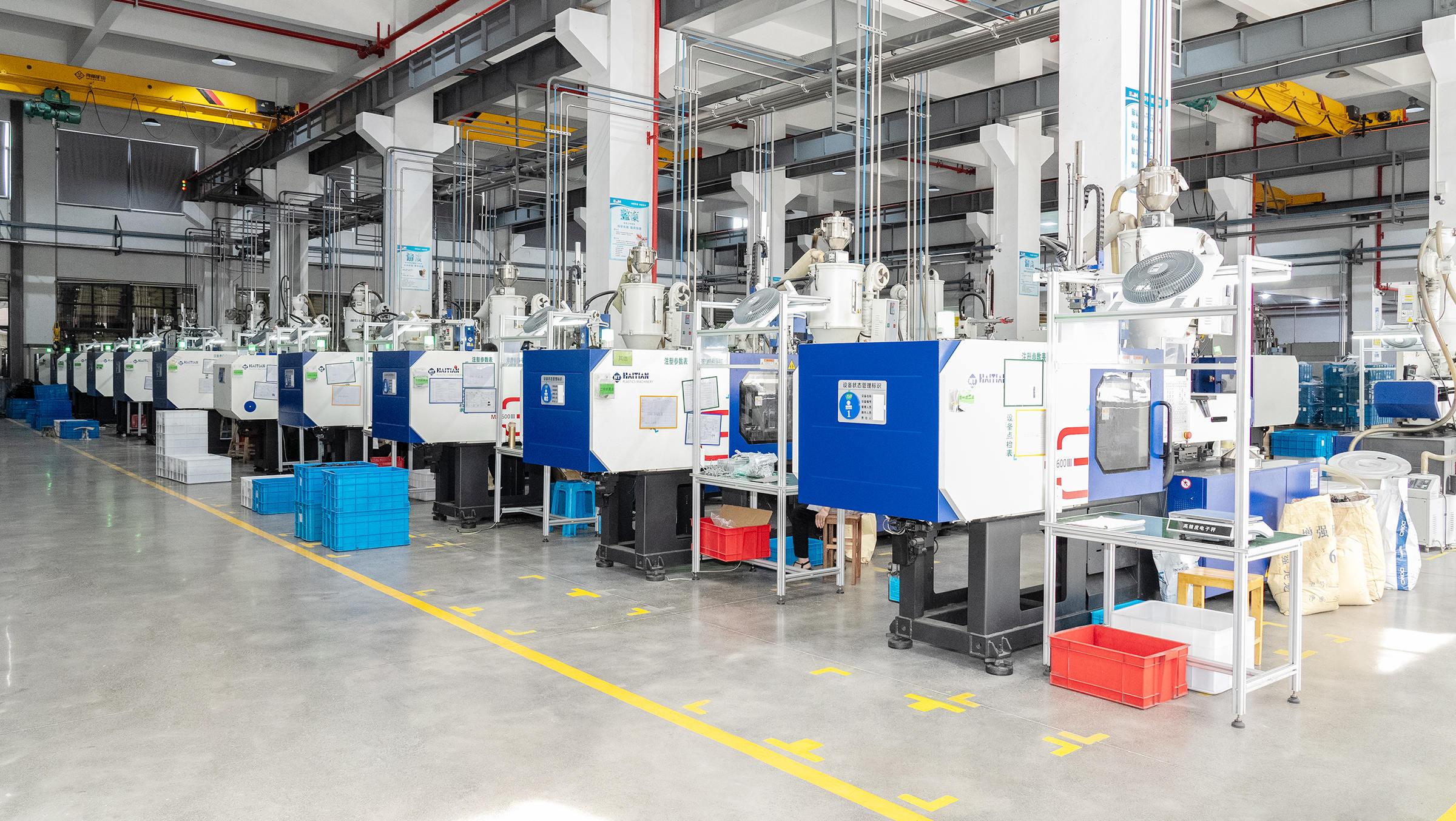
The processes that a custom item may use are also stated on the manufacturer's pages: injection molding, blow molding, extrusion, and vulcanization, with more than 10 production lines, 20 injection molding machines, 10 blow molding machines, and multiple vibration welding and ultrasonic welding machines. A buyer who knows which process their part needs should say so in the inquiry, because the process affects how the drawing is read and how the sample is checked. A buyer who does not know which process applies should send the drawing or sample and ask for the process to be confirmed, rather than naming a process at random. The same applies to quality checks: the manufacturer describes screening and auditing of raw material suppliers, incoming material testing and comparison, batch inspection under supplier indicators, and final full inspection according to customer requirements and international standards. A buyer who needs a specific check or document should ask for it by name, because this site makes no certificate claim of any kind and no certificate number appears anywhere in its pages.
Custom orders also change how fitment should be confirmed. A catalogue item can be checked against a named vehicle application, because the manufacturer has already listed the fitments. A custom item has no such list until it is developed, so the confirmation step is different: the drawing or sample is checked, the application is confirmed, and the developed item is checked against the drawing or sample before it is distributed. A distributor who orders a custom item should therefore plan for that checking step, and should not treat a custom item as if it were already a stocked catalogue item with a known fitment list.
The commercial steps for a custom order follow the same pattern as for a catalogue order, with one addition. Ask to confirm the reply time, the trade terms, and the shipping method in writing: the manufacturer states on its own pages that it replies to inquiries within 12 hours on working days, that trade terms are confirmed at quotation, and that shipment is usually by sea, by air if urgent. Before payment, confirm the part number or drawing reference, the fitment or application, the quantity, and the delivery terms. No minimum order, lead time, or price figure appears on this site, because the manufacturer's pages state none, and a buyer should not treat a figure from another supplier's listing as if it applied here. If a figure matters to planning, it should be asked for in the inquiry and confirmed in writing. For a custom order, the development and confirmation steps should be set out in writing at the same time, before any order is discussed.
A short version of the process, then, is this: send the drawing or sample, the application, and the quantity; ask for the process and any quality check to be confirmed by name; plan for the developed item to be checked against the drawing or sample; and confirm the drawing reference, the application, the quantity, and the delivery terms before payment. A custom order that follows those steps gives both sides the same definition of the part, and that shared definition is what makes a custom part repeatable on the next order.
Checking a custom part when it arrives is the step that closes the loop opened by the drawing or sample. The check should compare the delivered item with the drawing or sample that was sent, not with a catalogue description, because the drawing or sample is the definition that both sides agreed. The quantity and the packaging should be checked at the same time, and any difference should be raised before the goods are distributed, while the order is still fresh and the reference material is still at hand. If the delivered item differs from the drawing or sample, the difference should be described precisely, with photos, rather than in general terms, so the manufacturer can identify whether the difference is in the item, in the drawing, or in the reading of the drawing. That precision is also what makes the next order easier: a custom item that has been checked once against its drawing can be reordered against the same drawing with confidence, and the checking step on the next order can focus on quantity and packaging rather than on re-proving the item. Before payment on any repeat order, confirm the drawing reference, the application, the quantity, and the delivery terms, exactly as on the first order.
Send an inquiry: include the part number, the vehicle model and year, and the quantity you need. Before payment, confirm the part number, the fitment, the quantity, and the delivery terms.