How to Read a Part Number on an Engine Hose or Valve
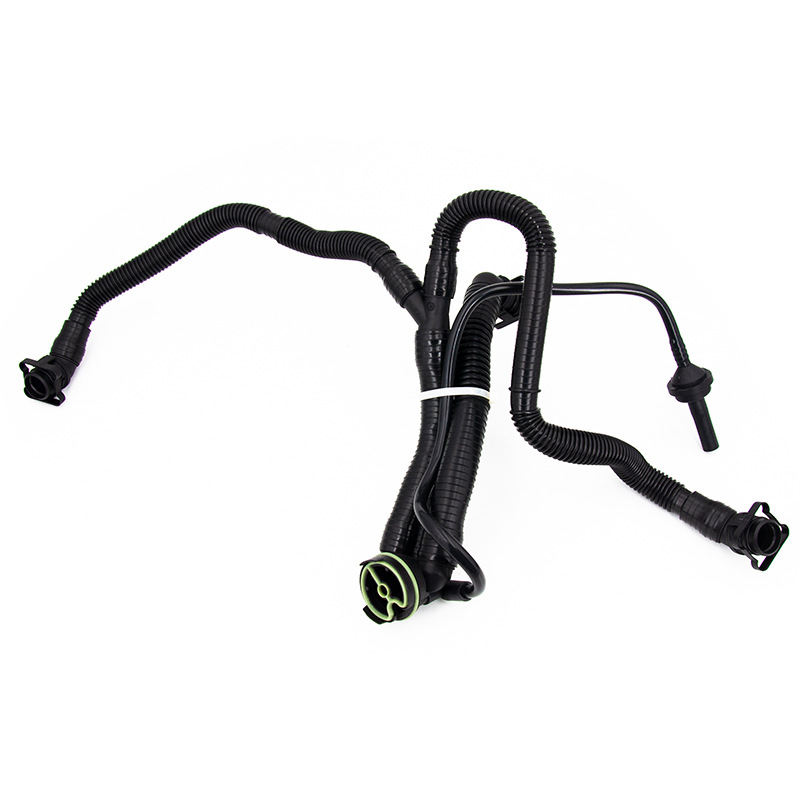
A part number is the shortest way to identify an engine hose or valve, and it is also the easiest thing to get wrong. A single letter at the end of a number can separate two different items, a number can belong to more than one vehicle across years, and a number copied from a worn part can be misread. This post explains how to read the part numbers used in this manufacturer's range, using only the numbers that its own pages actually show.
Start with the manufacturer's own code. Items in this range carry a JF code, such as JF2483, JF2097, JF0118, JF0125, JF2570, JF2082, JF3227, JF3310, and JF3349, and kits carry JFT codes, such as JFT0013 and JFT0045. The JF or JFT code is the manufacturer's internal item code. It is useful in an inquiry because it identifies the manufacturer's item directly, without depending on any other numbering system. When you write in, include the JF or JFT code first, because it removes the most common source of confusion: two items with similar names but different codes.
Next comes the fitment part number, which is the number from the vehicle maker's part-number system. Examples in this range include 03E103201C for the JF2483 PCV valve, 7PP819810A for the JF2097 heater control valve, A6110703232 for the JF0125 fuel pipe, 058133356P for the JF3227 air filter intake pipe, 8200331958 for the JF3358 air intake hose, 7700869985 for the JF3310 coolant pipe, and 11531438634 for the JF3349 coolant pipe. A fitment number tells a buyer which vehicle application the part is designed to be compatible with. It does not by itself prove who made the original part, and this site never uses it as such proof: every fitment item here is described with fits and compatible-with wording, as an aftermarket replacement part, and no original-equipment supply relationship is claimed.
The JF3005 hose family shows why the last characters of a number matter. The manufacturer's detail page names the item with the suffix 06E103217M, while its homepage card names a related item with the suffix 06E103217H. The manufacturer's pages do not confirm whether those two suffixes are variants of one item or two different items, so this site lists them separately and never merges them into a single part number. A buyer who needs a hose from this family should therefore include the full number, including its final letter, in the inquiry, and should not assume that a hose with one suffix can replace a hose with the other. If the suffix on the failed part is worn or unclear, a photo of the part and its markings will help the match to be checked.
Some items in this range show a set of numbers rather than a single number. The JF0118 fuel return line combination, for example, consists of the part numbers 8200589142, 8200166638, 8200403178, 8200274710, and 8200445124. A combination of that kind should be ordered as a combination, and an inquiry should name the whole set, not just one number from it. The same rule applies to kits: the JFT0013 BMW Complete Kit shows the part numbers 11617531423 and 11157522931 on its homepage card, and the JFT0045 VAG Repair Kit shows 059129711, 059129712, and 059198212. Those lists may be incomplete, because the manufacturer's pages contain only the homepage card text for those kits and no fetched detail page, so a buyer who needs the full contents should ask for the contents list to be confirmed before any order is discussed.
Vehicle years matter as much as the number itself. The JF2483 valve lists VW Polo models from 2002 to 2019 and Skoda Fabia models from 2000 to 2014, among others. The JF2097 valve lists Volkswagen Touareg vehicles produced between 2011 and 2018. The JF0125 fuel pipe lists Mercedes-Benz Sprinter models manufactured between 2000 and 2006, broken down by Sprinter 2-t, 3-t, and 4-t variants. A buyer should therefore always pair a part number with a vehicle model and year, because the same model name can cover different parts across its production run. An inquiry that gives only a vehicle name, without a year and without a part number, cannot be checked reliably, and this site will ask for the missing information rather than guessing.
Finally, a part number that cannot be read should not be guessed. If the markings on a failed hose or valve are worn, cracked, or covered, the reliable route is to send a photo of the part, a photo of any remaining markings, and the vehicle model and year, and to ask for the match to be confirmed in writing. The same applies to a number that appears in more than one listing with different suffixes, or to a kit whose contents are not fully listed. Before payment, confirm the part number, the fitment, the quantity, and the delivery terms. Those four confirmations, applied to every order, remove most of the errors that part numbers cause, and they cost nothing except the time to write them into the inquiry.
Keeping a part-number record is the habit that makes all of the reading above pay off. A distributor or workshop that records, for each item it buys, the manufacturer's code, the fitment part number including its final letter, the vehicle model and year, and the quantity ordered, will rarely need to re-identify the same item twice. The record also protects against the two most common part-number errors. The first is suffix drift: a hose ordered once with one suffix and once with another, without anyone noticing that the suffix changed. The second is supersession by assumption: a new number that looks similar to an old number being treated as a replacement without confirmation. Both errors are avoided by the same rule that runs through this post: the full number, including its final letter, plus the vehicle model and year, is the identity of the item, and anything less than that is a question, not an answer. When a number in the record is updated, the old number should be kept alongside the new one with a note about when and why it changed, so the history of the item remains readable. A record kept this way also makes a superseded number traceable years later, when the original vehicle is long out of production but its parts are still ordered. Before payment, confirm the part number, the fitment, the quantity, and the delivery terms, and record those four confirmations with the order.
Send an inquiry: include the part number, the vehicle model and year, and the quantity you need. Before payment, confirm the part number, the fitment, the quantity, and the delivery terms.